When Your Vehicle Leaves the Road
Winch-Out and Vehicle Recovery in Rossville for ditches, embankments, mud, and accident scene extractions
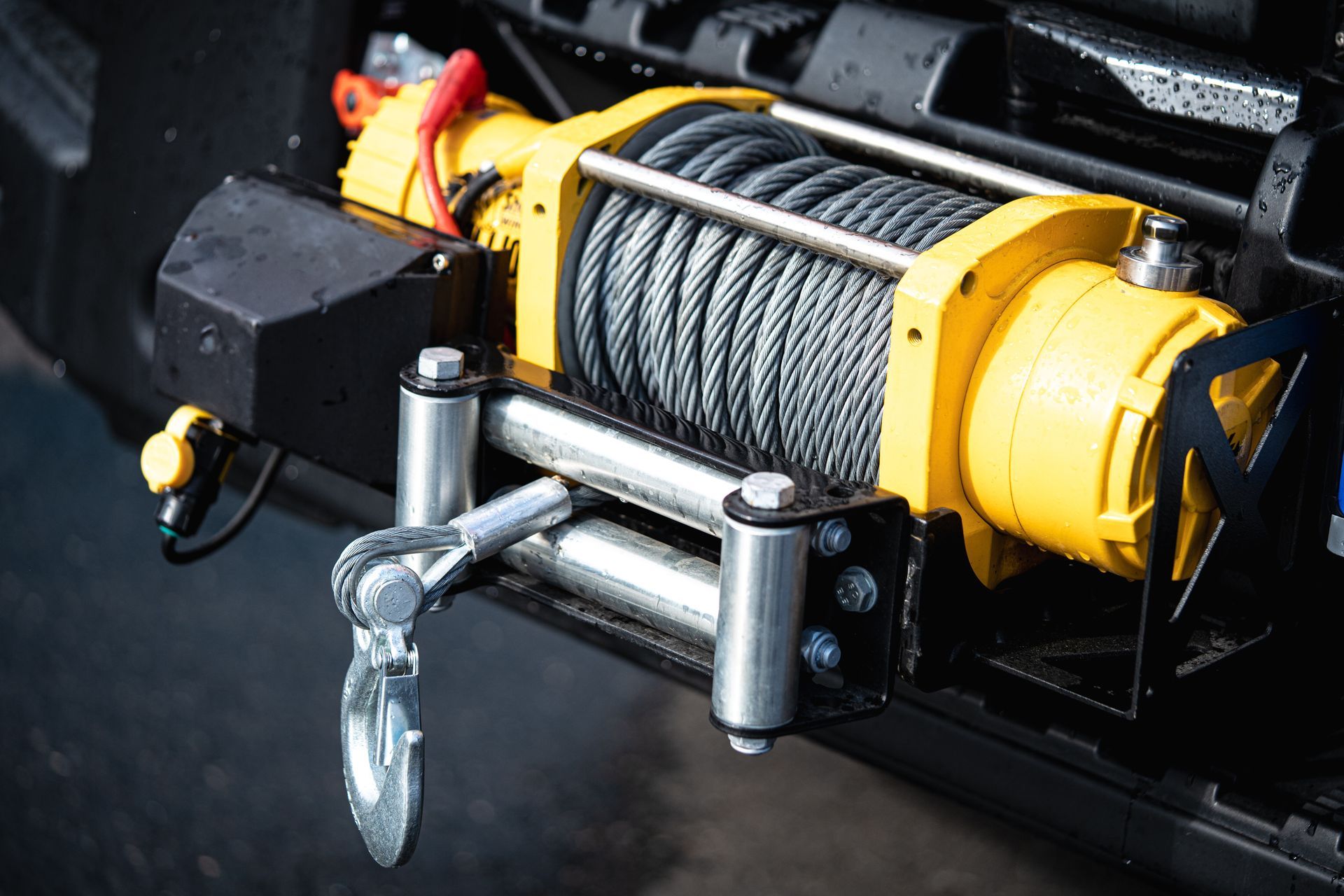
Gladiator Tow & Recovery handles winch-out and vehicle recovery in Rossville for drivers whose vehicles have ended up in terrain where standard roadside assistance cannot reach. That covers ditches along rural routes, embankments where the ground drops sharply away from the roadway, and off-road situations where a vehicle has settled into mud or uneven ground past the point of self-extraction. What separates a straightforward winch-out from a recovery operation is how the vehicle is positioned and how the ground around it behaves under load.
Each recovery begins with an assessment of what the vehicle is resting against or sunk into, which determines the rigging approach before any pull is attempted. A ditch recovery where the vehicle is nose-down requires a different anchor point and cable angle than a lateral embankment slide, and pulling from the wrong angle can drag a frame or puncture a rocker panel rather than lifting the vehicle onto firm ground. For mud and off-road extractions, the depth and consistency of what the tires are embedded in will determine whether a single-line winch pull is appropriate or whether block-and-tackle rigging is needed to multiply mechanical advantage. Accident scene recoveries follow a different sequence entirely, since vehicle stability and any fluid release from the collision site factor into how and where recovery equipment is positioned.
Arrange an on-site evaluation so the recovery approach matches the actual position and terrain of your vehicle.
How Vehicle Recovery Equipment Is Applied to the Situation
The equipment involved in a winch-out is only part of what determines whether a vehicle comes out cleanly. Recovery straps, D-ring shackles, snatch blocks, and ground anchors each play a role depending on what stable attachment points are available on the stuck vehicle and what can be used as a pull anchor in the surrounding area. When a vehicle is in a ditch with soft shoulders, a recovery truck cannot simply park beside it and winch straight across — the pull angle has to account for the slope and the direction that keeps the vehicle's undercarriage clear of the ditch edge as it moves.
Once the vehicle is back on stable pavement or ground, a walk-around confirms whether the extraction process created any contact with the undercarriage, wheels, or body panels. Vehicles recovered from embankments sometimes have debris embedded in wheel wells or suspension components that should be checked before driving. What you will notice immediately after a successful extraction is that the vehicle is upright, on solid surface, and drivable — or if it sustained damage in the original incident, staged for towing without further harm from the recovery itself.
Mud and off-road situations involve an additional consideration: if the vehicle has been stationary long enough for the ground to compress and seal around the tires, vacuum pressure builds underneath, and a direct pull increases the force required substantially. Breaking that seal before the main pull — sometimes by rocking the vehicle in small increments — is standard practice before full winch tension is applied to protect the vehicle's tie-down points and frame.
Common Questions About Winch-Out and Recovery Work
The questions below address how recovery operations are actually conducted and what affects the approach on each job.
What determines whether a vehicle needs a winch-out versus a full recovery operation?
A winch-out typically applies when the vehicle is accessible, relatively stable, and needs to be moved a short distance back to firm ground — a recovery operation involves more complex rigging, multiple attachment points, or a vehicle that is significantly off-axis or embedded in terrain where a straight pull is not possible.
How is the cable angle set during a ditch extraction?
The cable angle is calculated to lift the stuck end of the vehicle clear of the ditch edge while pulling it toward the road, which prevents the undercarriage from dragging across the lip of the ditch and causing secondary damage to the frame or exhaust components.
What equipment is used when a direct pull is not possible?
A snatch block is rigged to redirect the winch cable, which both changes the pull direction and doubles the mechanical advantage — this is standard when the recovery truck cannot park in direct line with the stuck vehicle or when terrain limits the anchor position.
Why does mud depth change the extraction method?
Deep mud creates suction around the tires and undercarriage that significantly increases the load on winch cables and vehicle tie-down points, so the approach shifts to breaking suction incrementally rather than applying full tension immediately, which reduces the risk of damaging factory tow hooks or frame rails.
What happens after an accident scene vehicle is extracted from a difficult position?
Once the vehicle is clear of the position it was held in by the collision, it is assessed for fluid leaks, structural stability, and whether it can be safely loaded for transport — in Rossville and the surrounding Walker County road network, accident recoveries on narrow county roads often require positioning the recovery truck in a way that keeps traffic lanes passable while the extraction is completed.
Gladiator Tow & Recovery is available for winch-out and vehicle recovery jobs across Rossville, from straightforward ditch pulls to complex embankment and accident scene extractions — request a dispatch for an assessment of your specific situation.