Business Vehicles Need More Than a Standard Tow
Commercial vehicle towing in Rossville for disabled business trucks and fleet vehicles requiring professional handling
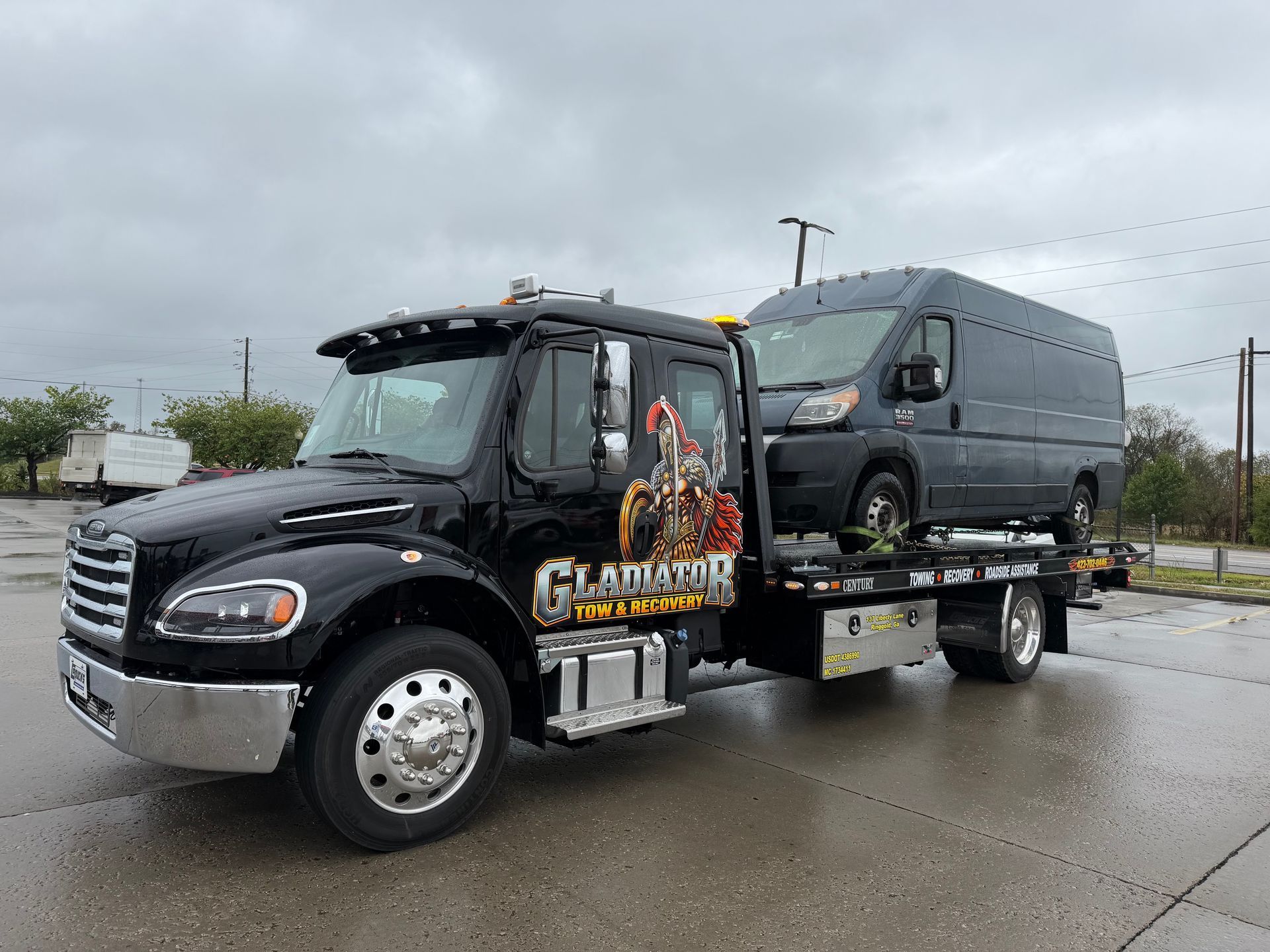
A disabled commercial vehicle sitting on a route is not just an inconvenience — it represents halted deliveries, stalled schedules, and a gap in the day's operations that compounds the longer the vehicle stays where it stopped. Gladiator Tow & Recovery provides commercial vehicle towing in Rossville for business trucks and fleet vehicles in the light and medium commercial class, handling the job with equipment and procedures matched to vehicles that weigh and are built differently than standard passenger cars. The distinction matters because improper towing of a commercial vehicle — wrong attachment point, mismatched rigging capacity, or a flatbed rated for passenger vehicles — can cause drivetrain or axle damage on top of whatever mechanical issue stopped the truck in the first place.
When a fleet call comes in, the first information gathered is vehicle type, current position, and whether the truck is drivable enough to be staged or needs to be extracted from its stopped position before loading. Commercial box trucks and delivery vehicles often stop in loading zones, narrow access roads, or behind commercial properties where maneuvering a tow rig requires careful positioning. Rossville's mix of light industrial corridors and commercial routes along the Georgia-Tennessee state line means fleet vehicles break down in locations that range from open highway shoulders to tight service alleys behind storefronts and warehouses.
Set up a dispatch request with vehicle specifics so the right rig is sent on the first roll..
What Proper Commercial Towing Requires
Light and medium commercial vehicles have gross vehicle weight ratings that affect how they're loaded onto a flatbed or rigged for a wheel-lift tow. A delivery van at or near its payload capacity sits differently than the same van empty, and the tow connection points on commercial vehicles are often frame-mounted rather than at bumper-level, which changes where straps and hooks are placed. Getting this right at the point of hookup is what prevents a commercial vehicle from arriving at the shop with damage beyond its original mechanical problem.
Once loaded and secured, what the fleet operator notices is that the vehicle arrives at the repair facility in the same condition it was picked up — no dragged rear axles, no damaged under-bumper equipment, and no new scrapes from improper deck loading. Gladiator Tow & Recovery documents the condition at pickup so both the business and the repair facility have a clear record of the vehicle's state when it was taken in, which simplifies the handoff and any subsequent insurance or fleet management paperwork.
Fleet vehicle assistance for businesses operating multiple units involves a different kind of planning than a one-time tow. If more than one vehicle requires service simultaneously, job sequencing matters — which truck needs to move first based on route impact, which location is accessible without blocking active delivery areas. These are the kinds of decisions that a commercial towing provider handles differently than a standard roadside service call.
What Fleet Operators Ask About the Work
The following covers how commercial towing is actually carried out and what businesses should know before calling for a disabled fleet vehicle.
What vehicle classes does commercial towing cover?
Gladiator Tow & Recovery handles light and medium commercial vehicles, which includes delivery vans, box trucks, and business pickup trucks — this class covers most fleet vehicles used in local distribution, service, and trade operations in Rossville.
How are commercial vehicle tow points different from passenger car connections?
Commercial vehicles typically have frame-mounted tow hooks or designated chassis attachment points specified by the manufacturer, and using the wrong connection — such as a bumper bracket not rated for the vehicle's weight — risks structural damage to the vehicle during the tow.
What happens when a commercial truck is stopped in a location that blocks traffic or access?
The tow rig is positioned to clear the lane or access point as quickly as possible, which sometimes means rigging the vehicle for a brief winch-out before loading if it cannot be driven onto the flatbed deck from its stopped position.
How does the towing process differ for a loaded commercial vehicle versus an empty one?
A loaded vehicle shifts its weight distribution toward the cargo area, which affects how the deck is leveled during loading and where tie-down straps are placed to prevent movement during transport — empty vehicles are generally more straightforward but still require manufacturer-specified tow point connections.
What should a fleet manager communicate when calling about a disabled commercial vehicle?
Vehicle type, approximate weight class, current location and whether it is blocking traffic, and whether the vehicle has any drivetrain or brake conditions that affect how it can be loaded — this information gets the right equipment dispatched rather than requiring a second trip.
Gladiator Tow & Recovery handles commercial vehicle towing in Rossville for businesses that need a disabled truck moved without added complications — contact the team directly with your vehicle details to arrange a dispatch matched to your fleet vehicle's class and situation.